
[ Mezo testnet · Pre-audit ]
Spend Bitcoin.
Never sell it.
Borrow MUSD, Mezo’s Bitcoin-backed dollar, against your BTC and pay anyone by @handle.
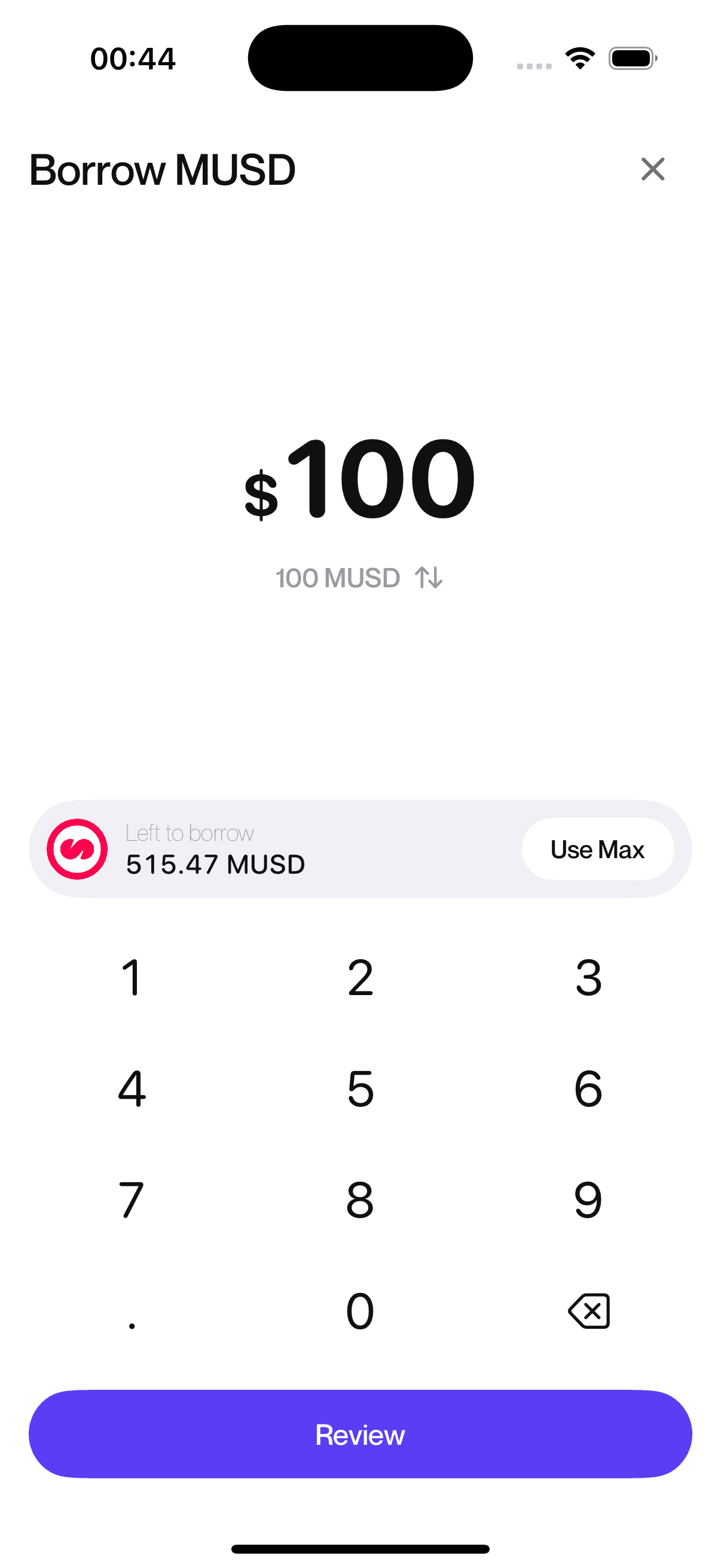
Borrow against BTC 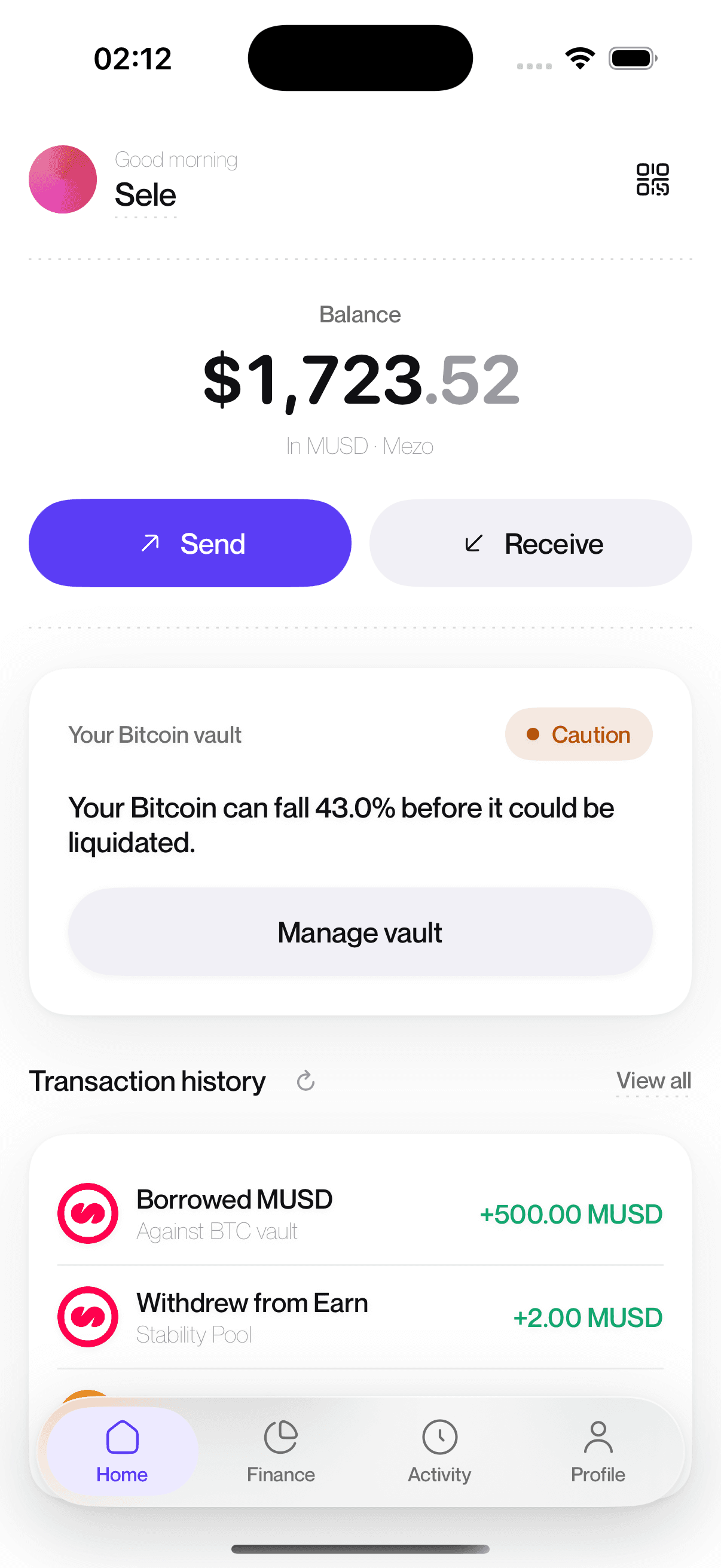
Your balance and vault 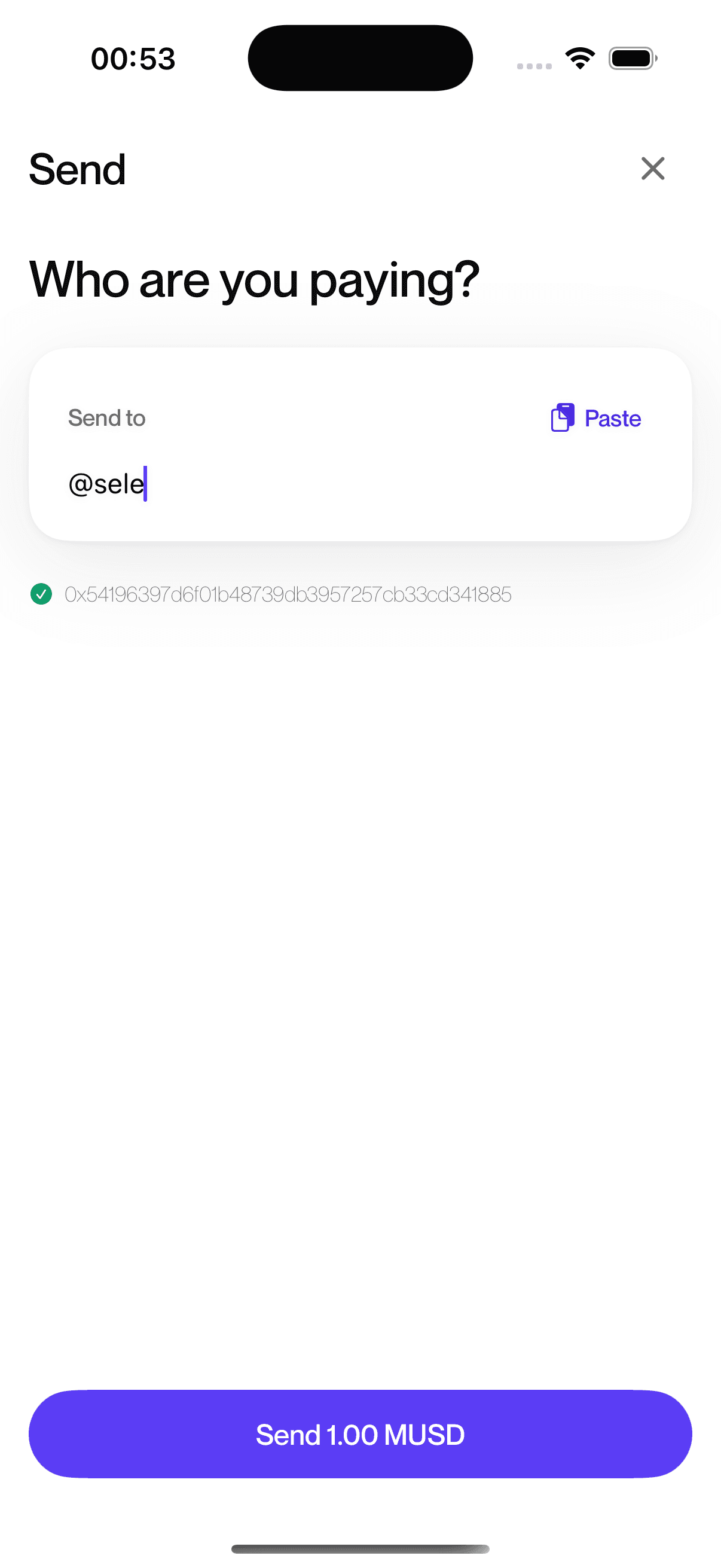
Pay by @handle
[ How it works ]
Three steps from Bitcoin to a payment.
Deposit Bitcoin
Start from 0.001 BTC. The deposit itself needs a little BTC for gas.
Borrow MUSD
Draw dollars against your Bitcoin instead of selling it. The app shows how far Bitcoin can fall before your position could be liquidated.
Pay anyone
Send MUSD to an @handle or to any address. Payments move wallet to wallet.
[ Status ]
Where things stand.
- Non-custodial
- Your keys stay in your own wallet, never on Maren’s servers.
- Sponsored gas
- Maren’s relayer pays the gas on borrows, repays and payments, and simulates every call before it pays. Deposits, approvals and payment links need a little BTC.
- Five contracts source-verified
- Anyone can read the contract source on Blockscout.
- Pre-audit, testnet only
- No audit yet. Maren runs on Mezo testnet, with testnet funds only.
[ FAQ ]
Risk, stated plainly.
We are handling people’s Bitcoin. Risk gets stated plainly, or it is not stated at all.
Your position is measured by its collateral ratio. Mezo liquidates a trove at 110%. Maren’s own liquidation threshold is 140%: below it, Maren seizes that user’s collateral at a 5% penalty and repays their share of the pooled debt.
The 30-point buffer means a fast drawdown reaches Maren’s threshold long before it reaches the protocol’s cliff. The app shows your ratio and your distance to 140% on every read. The keeper that acts on it is not automated yet: the contract functions are deployed, but they are run by hand today. If Bitcoin falls far enough and fast enough, a position can still be liquidated. That is the nature of a collateralised loan, and no design removes it.
You control the signing keys. Payments move MUSD wallet to wallet via transferFrom under your own permit. Deposited Bitcoin is held by the vault’s smart contracts, claimable links hold MUSD in escrow until they are claimed or reclaimed after expiry, and Earn holds deposited MUSD.
The pooled vault is the honest exception, and we will not soften it: pooled positions share one trove. Maren runs a single large, conservatively managed trove and gives each depositor a proportional claim inside it. Your collateral is segregated in accounting, not in custody. A catastrophic, faster-than-keeper drawdown could socialise losses across depositors.
The mitigations are the 140/110 buffer, the 0.001 BTC deposit floor, and a protocol-owned insurance buffer funded from the 5% liquidation penalty, which stands at zero because nothing has been liquidated. Automated keeper monitoring is not built yet. These are mitigations, not a guarantee. If you hold more than the protocol minimum, Maren steers you to a direct trove, which carries no pooling risk at all, and the interface says so at the point of decision.
Maren pays the Bitcoin fee; the fee has not stopped existing. This deployment has a relayer. Whether it is taking work is something the app answers per action, on screen, before you sign anything. Trust that line, not this page.
It works like this: you sign, Maren checks what you signed, simulates the call, and pays. Whatever submits for you can only ever touch Maren’s own contracts, and can never move your Bitcoin.
BTC deposits carry native value and need your own BTC for gas. Payment links and approvals can need gas too. Keep a small testnet BTC balance, and check the fee shown before you sign.
Not yet. Maren is pre-audit. A third-party audit of MarenVault, MarenEarn and MarenRelayHub, the three contracts in the planned audit scope, is required before mainnet.
Until that audit is complete and published, treat Maren as unaudited software and do not send it real funds. This beta uses testnet funds only. Mainnet launches with the vault capped, and the cap rises only as the position proves out.
[ Testnet ]
Try the full loop on testnet.
Deposit, borrow and pay with testnet funds, right in your browser.